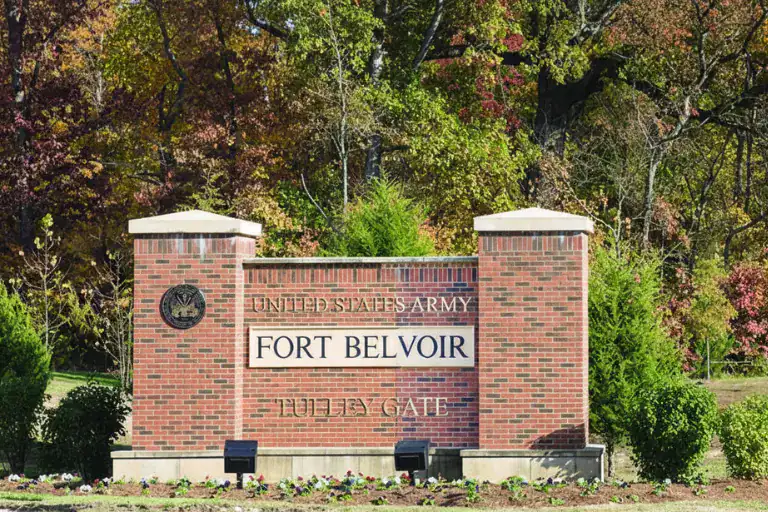
Fort Polk at a Glance
Fort Polk is located in Vernon Parish in west-central Louisiana, approximately ten miles east of Leesville and thirty miles north of DeRidder. The installation covers nearly 200,000 acres, most of it adjacent to Kisatchie National Forest. It is one of the largest Army installations by land area in the continental United States.
The post was established in 1941 as Camp Polk to support the Louisiana Maneuvers — a massive training exercise involving roughly half a million soldiers that shaped U.S. Army combat doctrine for World War II. The installation has gone through several name changes in recent years. After being renamed Fort Johnson in 2023, the name was officially restored to Fort Polk in June 2025, now honoring four-star General James H. Polk, a decorated World War II officer who served as Commander-in-Chief of U.S. Army Europe and earned the Silver Star, the Army Distinguished Service Medal, and France’s Legion of Honor over his career.
Key Installation Facts
- Branch: U.S. Army
- Location: Vernon Parish, Louisiana — 10 miles east of Leesville
- Size: Approximately 198,000 acres
- Primary mission: Joint Readiness Training Center (JRTC) — the Army’s premier combat training center
- Population: Approximately 9,000 military and civilian personnel on post
- Nearby cities: Leesville (10 miles), DeRidder (30 miles), Alexandria (65 miles), Lake Charles (65 miles)
- Official website: home.army.mil/polk
The JRTC Mission — What It Means for Your Family
Before you make any decisions about housing, schools, or employment, you need to understand what the JRTC mission means for daily life at Fort Polk. This is the single most important thing to grasp before you arrive.
The Joint Readiness Training Center is the Army’s primary training ground for light infantry and special operations forces preparing for combat deployment. Brigade Combat Teams from installations across the Army rotate through Fort Polk for intensive, realistic training exercises — typically lasting 21 days at a stretch. The JRTC’s Operations Group (the Opposing Force, or OPFOR) and exercise control elements are permanently assigned to Fort Polk and work on a rotation-based schedule that bears no resemblance to a standard Monday–Friday work calendar.
Additionally, Fort Polk is home to the 3rd Brigade Combat Team, 10th Mountain Division, which deploys for training rotations, real-world missions, and exercises on a schedule driven by Army readiness requirements. The 1st Maneuver Enhancement Brigade, 115th Combat Support Hospital, 5th Aviation Battalion, and 162nd Infantry Brigade round out the tenant units.
What this means practically: deployment and TDY tempo at Fort Polk is consistently high. Spouses managing households solo during long field problems, JRTC rotations, and real deployments are the norm, not the exception. The post community is experienced with supporting families through this — but you should go in clear-eyed about it. Choose your neighborhood, schools, and support systems with the assumption that your soldier will be unavailable for long stretches.
In-Processing at Fort Polk
In-processing at Fort Polk is centralized. All new arrivals report to the In/Out Processing Center during regular duty hours. Call (337) 531-7258 (DSN: 312-863-7258) to coordinate your arrival. The center handles in-processing appointments, PCS final-out processing, retirements, separations, and related administrative requirements in a single location.
Newcomer Orientation
Army Community Service runs a Newcomer and Re-entry Orientation every Thursday at the ACS Center (Building 920, Bell Richard Avenue). Sign-in begins at 0900. Representatives from JRTC and Fort Polk provide briefings on installation agencies, community resources, and what to expect during your tour. Lunch is provided. Both soldiers and family members are strongly encouraged to attend — it is the fastest way to get oriented and connect with people who know the installation. Contact ACS at (337) 531-2840 or (726) 780-0386 to confirm the schedule.
Your PCS binder checklist will help you organize the documents you need before and during in-processing — school records, medical records, housing applications, and financial documents all go smoother when they are staged in advance.
Housing at Fort Polk: On-Post vs. Off-Post
This is the decision that shapes everything else about your Fort Polk experience. Here is the honest breakdown — not a sales pitch for either option.
On-Post Housing: Corvias Military Living
On-post housing at Fort Polk is privatized and managed by Corvias Military Living. Three neighborhood communities serve families of different sizes, with homes ranging from two to five bedrooms. The all-inclusive structure covers most utilities, lawn care, trash pickup, pest control, and access to community pools, walking trails, fitness centers, and four Community Centers. The on-post environment is tight-knit and familiar — neighbors understand deployment schedules, PT formations, and the general rhythm of Army life in a way that civilian communities cannot replicate.
There is a waiting list for on-post housing. Apply as early as 90 days before your report date. Contact the Corvias Leasing and Relocation Center at (337) 537-5060 or visit polk.corviasmilitaryliving.com. Single soldiers in grades E-1 through E-5 who are not drawing BAH at the with-dependents rate are required to live in the barracks (Warriors Keep, Building 1635).
The honest reality about on-post housing: many of the homes are older and show their age. Carpet is not always replaced between tenants. Floor plans vary widely, and taking the time to review options before accepting a unit — or having someone look at it for you before you commit — is worth the effort. Corvias does offer bedroom upgrades to qualifying families when availability permits.
Off-Post Housing: What the Market Looks Like
The Fort Polk area offers some of the most affordable off-post housing near any Army installation in the country. The primary communities military families choose are Leesville and New Llano (closest to post), DeRidder (most popular, 30 miles south in Beauregard Parish), and the Rosepine and Pickering corridor (between the two, with more space and land). Property taxes in Vernon and Beauregard Parishes are among the lowest in the country.
If you are considering buying rather than renting during your tour, we have a dedicated guide that covers neighborhoods, BAH purchasing power by pay grade, gate commute times, new construction options, property taxes, and insurance costs in full detail. Read it before you start shopping: Buying a Home Near Fort Polk: VA Loan Guide →
For BAH rates by pay grade, use our BAH calculator to confirm your specific rate — BAH at Fort Polk (MHA: LA115) is lower than at most installations, which surprises families coming from higher-cost duty stations. The upside is that local home prices and rents are proportionally lower as well.
Schools Near Fort Polk
There are no DoDEA schools at Fort Polk. Military children attend public schools through either the Vernon Parish School Board or the Beauregard Parish School Board, depending on your off-post address. Two elementary schools on post operate under the Vernon Parish School District and serve pre-K through 5th grade. The School Liaison Officer at (337) 531-9481 is your first call for school enrollment questions — they can walk you through transfer requirements, which vary between districts, and help you identify the best fit for your children based on where you plan to live.
Vernon Parish School District
Vernon Parish schools serve families living on post and in the Leesville/New Llano area. The district runs from pre-K through high school with multiple campuses serving different attendance zones. Local high schools in the Vernon Parish system include Leesville High in New Llano and Pickering High, which serves the Rosepine/Pickering corridor and has a strong community reputation within the district. The district has improved steadily over the years, though school quality varies by campus. The School Liaison Officer can help you navigate the options.
Beauregard Parish School District
Families who choose to live in DeRidder and the surrounding Beauregard Parish area fall under the Beauregard Parish School District. This district is generally regarded as having stronger outcomes than Vernon Parish schools across multiple metrics, and it is a significant factor in why DeRidder is the most popular off-post choice for families with school-age children. DeRidder High School is the primary high school serving the area.
School Liaison Office Contact
Fort Polk School Liaison Office: (337) 531-9481, DSN 312-863-9481. They are your definitive resource for enrollment requirements, records transfer timelines, school supply needs, and any special education or support service questions. Visit the Vernon Parish School Board website for district-specific information.
Medical Care at Fort Polk
Bayne-Jones Army Community Hospital (BJACH)
Fort Polk’s primary medical facility is Bayne-Jones Army Community Hospital (BJACH), located at 1585 3rd Street, Fort Polk, LA 71459. The hospital provides full-service inpatient and outpatient care including surgical facilities, a labor and delivery unit, emergency care, primary care, and specialty care. Families report positive experiences with labor and delivery in particular.
For appointments and general inquiries, call (337) 531-3118 or (337) 531-3119 (DSN: 312-863-3118/3119). The hospital website is bayne-jones.tricare.mil.
Pharmacy hours
Mondays: 0800–1800 | Tuesday–Friday: 0730–1800 | Saturday: 0830–1230 | Training holidays: 0730–1600 | Sundays and federal holidays: closed.
TRICARE at Fort Polk
Active-duty families at Fort Polk are enrolled in TRICARE Prime with BJACH as the Primary Care Manager (PCM) facility. Referrals to civilian specialists are available when on-post care is not available for a specific need. For questions about TRICARE coverage, enrollment, or finding civilian providers in the area, visit tricare.mil. TRICARE South Region serves Louisiana and can assist with coverage questions.
The nearest civilian hospital is Byrd Regional Hospital in Leesville (about 10 miles from post), which provides emergency and general inpatient services for situations requiring civilian care.
Exceptional Family Member Program (EFMP)
If any family member has special medical or educational needs, enrollment in the EFMP is required before your PCS orders are finalized. ACS at Fort Polk manages EFMP enrollment and can connect families with on-post and community resources that support special needs. Contact ACS at (337) 531-2840. Get your EFMP enrollment completed early — it affects housing assignment and school placement.
Army Community Service (ACS)
The ACS Prevention Center at Building 920 on Bell Richard Avenue is the hub for family support at Fort Polk. It is worth visiting during your first week. Programs and services include:
- Relocation Readiness: Welcome packets, newcomer orientation, area briefings, and one-on-one relocation counseling
- Employment Readiness: Resume writing, job search assistance, interview coaching, and access to the Civilian Employment Assignment Tool (CEAT) for military spouses
- Financial Readiness: Free financial counseling, budgeting assistance, debt reduction coaching, and Army Emergency Relief (AER) for soldiers and families facing financial hardship
- Family Advocacy Program (FAP): Prevention and support programs for domestic violence and child abuse; HOPELINE crisis support at (337) 531-HOPE (4673)
- New Parent Support Program: Home visits and support for new and expecting parents
- Military Family Life Counselors (MFLC): Free, confidential short-term counseling for soldiers and families
- Survivor Outreach Services: Support for surviving family members of fallen soldiers
ACS main line: (726) 780-0386 | (337) 531-2840. Building 920 is located at 1591 Bell Richard Avenue.
Child and Youth Services (CYS)
Fort Polk CYS provides childcare and youth programming for eligible military and civilian families. All care is DoD-certified and nationally accredited. Programs include:
- Child Development Centers (CDC): Full-time and hourly childcare for children 6 weeks through 5 years old, plus preschool programs
- School Age Center (SAC): Before and after school care for grades 1–5, plus care during school breaks
- Middle School and Teen (MST) Program: Tutoring, mentoring, computer labs, sports, and fitness for grades 6–12
- Family Child Care (FCC): Home-based care for children 4 weeks through 12 years old in a small, family environment — available for extended care and 24-hour if mission requires
CYS fees are income-based and affordable regardless of the sponsor’s pay grade. CYS Main Office is at Building 924, 7960 Mississippi Avenue. Call (726) 780-1076 to start your enrollment process. Walk-ins are accepted Monday–Thursday 1:00–4:00 PM. For CDC childcare inquiries, call (337) 531-1955.
Spouse Employment at Fort Polk
Spouse employment is one of the harder realities of a Fort Polk tour. The Leesville area is rural and the local job market is smaller than at installations near major metros. That said, several paths are available and the ACS Employment Readiness Program is genuinely helpful.
On-post employment opportunities exist within DFMWR, the commissary and PX, BJACH, and contractor positions. The Civilian Employment Assignment Tool (CEAT) is available through ACS and connects military spouses with federal civilian job opportunities. Remote work has become much more viable post-pandemic and is how many Fort Polk spouses build careers during this tour — if remote work is a possibility for your field, this is an installation where it makes a real quality-of-life difference. DeRidder’s larger economy (30 miles south) offers additional civilian employer options for families living in Beauregard Parish.
ACS Employment Readiness Program contact: Building 920, Bell Richard Avenue | (726) 780-0625.
Living in Louisiana: What to Expect Before You Land
Louisiana is unlike any other state you have probably been stationed in, and the Fort Polk area sits in the heart of a culture that requires some adjustment. Here is the honest version.
Climate
Summer at Fort Polk is brutal. Temperatures regularly hit 95–100°F with humidity above 80%, and the heat index frequently exceeds 110°F. Outdoor physical activity in the summer requires serious hydration management — the Army takes heat-related illness protocols seriously here, and families need to as well. Fall and winter are mild — temperatures in the 30s and 40s during the coldest stretches, with no significant snow. Spring is warm and wet. Year-round, you should expect rain, mud on the training areas, and humidity that affects everything from wood floors to HVAC systems.
Hurricane season runs June through November. Fort Polk is 65 miles inland from the Gulf of Mexico, and the installation regularly experiences tropical storm conditions and sometimes direct hurricane impacts. Learn your evacuation routes immediately. Many on-post and off-post families maintain backup generators because power outages during storms are common and can last days. Have a go-bag ready and an emergency plan established before the first storm of the season.
Cajun Country Culture
The food near Fort Polk is genuinely good and worth exploring. Po’boys on white French bread, crawfish boils, boudin (a pork-and-rice Cajun sausage you will either love immediately or grow to love over time), and gumbo are all accessible locally. The Leesville Main Street corridor has local restaurants and cafes, and the surrounding parishes offer roadside cooking that you will not find anywhere else in the Army. Further exploration toward New Orleans or Lafayette opens up some of the best food in the country.
Additionally, Louisiana has Parishes instead of Counties — this matters for everything from school enrollment to property taxes to voter registration. Vernon Parish covers the Leesville area. Beauregard Parish covers DeRidder. You will see Parish designations on virtually all official documents and addresses.
The Outdoor Recreation Reality
If your family hunts, fishes, kayaks, hikes, or camps, Fort Polk is a genuine gift. Kisatchie National Forest stretches across more than 600,000 acres east of the installation with bayous, hiking trails, and wildlife. Toledo Bend Reservoir — 45 miles northwest of post — is one of the largest man-made reservoirs in the South and is accessible through Fort Polk MWR with cabin rentals, camping, boat rentals, and year-round fishing. Alligator Lake Recreation Area on post offers camping, kayaking, paddle boats, and sports equipment rental. The MWR Recreational Shooting Complex offers skeet/trap, pistol, rifle, archery, and paintball ranges.
Families who lean into the outdoor culture at Fort Polk consistently describe it as a highlight of the tour. Families who prefer urban amenities and need easy access to shopping, dining, and entertainment will find this installation more challenging — and should plan weekend trips to Alexandria or Lake Charles to decompress.
On-Post Amenities and MWR
Fort Polk’s MWR program is strong for an installation of its size. On-post amenities include:
- Warrior Hills Golf Course: 18-hole golf course with a driving range
- Fitness Centers: Multiple facilities including Wheelock Fitness Center (with sauna and steam room), Cantrell Fitness Center, and a functional fitness center with battle ropes, climbing ropes, assault bikes, and full weight rigs
- Klubs and Karts: 9 and 18-hole mini-golf, go-karts (Building 1402, (337) 531-5481)
- Bowling center, arts and crafts, auto shop
- The 15,000 sq ft service member lounge (Warrior Zone): Screening rooms, computer stations, gaming lounge, pool tables, ping pong, band space — at 2165 9th Street, (337) 531-5870
- Intramural Sports Program: 18 sports including basketball, flag football, slow-pitch softball, soccer, volleyball, tennis, and golf
- Library, commissary, PX/AAFES, and post chapel
- Toledo Bend Army Recreation Park: 45 miles from post — cabin and yurt rentals, camping, boat rentals, fishing — call (888) 718-9088 or (318) 565-4235
Visit polk.armymwr.com for current hours, pricing, and event schedules. MWR events run year-round and the community-building programs are worth checking into during your first week.
What the Fort Polk Community Feels Like
Fort Polk has a post-built-around-a-mission feel that is different from installations near major metropolitan areas. The surrounding community grew up to serve the base, not the other way around. That means the off-post commercial infrastructure is smaller and more limited than families expect — but it also means that the on-post and military community is unusually cohesive. You will know your neighbors. FRGs tend to be more active because the deployment tempo forces people to lean on each other. The post itself is self-contained in many important ways.
Families who arrive expecting Fort Polk to be something it is not — a posting near a major city with easy access to everything — leave frustrated. Families who arrive knowing they are going to be in rural Louisiana for three years, embrace the outdoor life, lean into the community, and take weekend trips to Alexandria or Lake Charles for variety, often end up feeling genuinely connected in a way that larger, more transient installations cannot replicate.
That honest framing matters for spouse resilience during deployments. Community support is strong here precisely because everyone has been through it. The ACS MFLC program, the Family Advocacy programs, and the informal networks built through FRGs and on-post neighborhood groups are real resources, not just check-the-box programs. Use them.
Getting There: Routes to Fort Polk
Fort Polk is reached via U.S. Highway 171 from the north or south, or via U.S. Highway 28 from the east. The Main Gate (ACP 1, Louisiana Avenue) is open 24 hours, 7 days a week, and is located on Highway 171. If you are driving in from Highway 28, turn onto Chaffee Road — this route takes you through North Fort to South Fort and is the primary route for units based in the northern part of the installation.
The nearest commercial airports are Alexandria Regional Airport (Alexandria, LA — 65 miles) and Lake Charles Regional Airport (Lake Charles, LA — 65 miles). Neither offers the flight frequency of major hub airports, so plan your travel windows accordingly.
Essential Phone Numbers and Contacts
| Office |
Phone |
| In/Out Processing Center |
(337) 531-7258 |
| Bayne-Jones ACH (appointments) |
(337) 531-3118 / 3119 |
| Corvias Housing (Leasing & Relocation) |
(337) 537-5060 |
| ACS Center (general) |
(337) 531-2840 | (726) 780-0386 |
| CYS Main Office |
(726) 780-1076 |
| CYS Childcare (CDC) |
(337) 531-1955 |
| School Liaison Office |
(337) 531-9481 |
| EFMP / ACS Counseling |
(337) 531-2840 |
| HOPELINE (Family Advocacy) |
(337) 531-HOPE (4673) |
| ACS Employment Readiness |
(726) 780-0625 |
| MWR (Toledo Bend Park) |
(888) 718-9088 |
| MWR (Alligator Lake) |
(337) 531-5350 |
| MWR Shooting Range |
(337) 531-7552 |
Always confirm current hours and contact information at home.army.mil/polk before calling — numbers and hours are subject to change.
Planning Your PCS Move
Once your orders drop, use these resources to get ahead of the timeline:
Frequently Asked Questions About PCS to Fort Polk
Is Fort Polk a good duty station for families?
It depends on the family. Fort Polk offers strong on-post community support, exceptional outdoor recreation, and one of the most affordable cost-of-living environments near any Army post. Families who love the outdoors, prefer low cost of living, and can build community through FRGs and post programs tend to rate Fort Polk positively. Families who need urban amenities, proximity to major employers for spouse careers, or prefer mild weather typically find it more challenging. Honest expectations matter more than the base’s reputation.
What is the JRTC at Fort Polk?
JRTC stands for Joint Readiness Training Center — the Army’s premier combat training center for light infantry and special operations forces. Brigade Combat Teams from across the Army rotate through Fort Polk for intensive 21-day combat training exercises. Soldiers assigned to JRTC’s Operations Group work on rotation cycles rather than a standard calendar. This means high tempo, frequent field time, and limited predictability in scheduling — families at Fort Polk live with this reality as a baseline.
How do I apply for on-post housing at Fort Polk?
On-post housing is managed by Corvias Military Living. You can apply up to 90 days before your report date. Contact the Corvias Leasing and Relocation Center at (337) 537-5060. Waiting lists exist for some configurations, so apply early. Single soldiers E-5 and below not drawing BAH at the with-dependents rate are required to live in the barracks.
What schools serve military families at Fort Polk?
There are no DoDEA schools at Fort Polk. Families use either Vernon Parish schools (on-post and Leesville area) or Beauregard Parish schools (DeRidder area). Two elementary schools on post are run by Vernon Parish. The School Liaison Office at (337) 531-9481 is the definitive resource for enrollment questions and school placement guidance based on your address.
What is the nearest hospital to Fort Polk?
Bayne-Jones Army Community Hospital (BJACH) is the on-post military treatment facility at 1585 3rd Street, Fort Polk. Call (337) 531-3118 for appointments. The nearest civilian hospital is Byrd Regional Hospital in Leesville. Active-duty families are enrolled in TRICARE Prime with BJACH as the PCM facility.
How far is Fort Polk from the nearest major city?
Fort Polk is about 65 miles from Alexandria and Lake Charles (roughly an hour each). Baton Rouge is about 160 miles, and New Orleans is about 240 miles. Houston, Texas is approximately 190 miles west. There is no major city within an easy daily commute — plan your shopping, specialty medical, and entertainment trips as deliberate excursions.
What is Fort Polk like in summer?
Hot, humid, and intense. Temperatures regularly exceed 95–100°F with high humidity that pushes the heat index well above 110°F. The Army takes heat-related illness protocols seriously here for good reason. Hydration discipline and heat acclimatization during outdoor activities are genuine concerns for families arriving from northern installations. Additionally, hurricane season runs June through November — learn your evacuation routes and prepare an emergency kit before the first storm of the season.
Is Fort Polk a good station for spouse employment?
It is a harder employment market than installations near major cities. The Leesville area is rural with a smaller civilian employer base. On-post federal civilian jobs exist through BJACH, DFMWR, commissary, and contractor positions. The ACS Employment Readiness Program at (726) 780-0625 provides job search support, resume assistance, and access to the CEAT federal job tool. Remote work has been the most effective path for many Fort Polk spouses, particularly in fields like healthcare, education, finance, and technology.
What outdoor recreation is available near Fort Polk?
Exceptional. Kisatchie National Forest covers more than 600,000 acres adjacent to the installation with hiking, fishing, kayaking, and camping. Toledo Bend Reservoir (45 miles northwest) is the largest man-made reservoir in the South, accessible through Fort Polk MWR with cabin rentals, boat rentals, and camping. Alligator Lake Recreation Area on post offers camping and water recreation. The MWR Shooting Complex covers skeet/trap, pistol, rifle, archery, and paintball. Hunting and fishing permits are available for use of the Fort Polk Wildlife Management Area on the installation.
What should I know about Louisiana Parishes vs. Counties?
Louisiana uses Parishes instead of Counties for its administrative divisions. Fort Polk sits in Vernon Parish. DeRidder is in Beauregard Parish. Your Parish determines your school district, property tax assessor, voter registration, and much of your local government. This is not just trivia — it matters when you are enrolling children in school, applying for a homestead exemption, or researching property taxes before buying. Both Vernon and Beauregard Parish assessors’ offices have helpful staff who are accustomed to assisting military families.
Are there feral horses at Fort Polk?
Yes. An estimated 700 to 750 feral horses roam the training areas and surrounding lands at Fort Polk — a quirky but genuine feature of this installation. They descend from horses left behind after early military maneuvers and have roamed the piney woods for decades. The Army has managed debates about their fate for years. If you are driving through training areas or the surrounding forest, encountering them is possible and memorable.
Key Takeaways
Fort Polk is a high-tempo, high-training environment — JRTC rotation schedules and 10th Mountain BCT deployment cycles mean your soldier will be in the field or deployed frequently. Build your family infrastructure around that reality before you arrive.
The surrounding area is genuinely rural — Leesville (population ~10,000) is the closest town. Alexandria and Lake Charles are each 65 miles away. Urban amenities require deliberate trips. Families who plan for this thrive; families who are surprised by it struggle.
The outdoor recreation is world-class — Kisatchie National Forest, Toledo Bend Reservoir, on-post lakes, shooting ranges, and hunting and fishing access make Fort Polk exceptional for families who love the outdoors. If this is your lifestyle, this installation is a hidden gem.
Cost of living is one of the lowest near any Army post — housing, dining, and everyday expenses in the Fort Polk area run significantly below national averages. Your BAH goes further here than at almost any other installation, even though the dollar amount is lower than at higher-cost stations.
Apply for Corvias housing early — waiting lists exist. Call (337) 537-5060 as soon as your orders drop. EFMP families should coordinate through ACS at (337) 531-2840 even earlier.
ACS at Building 920 is your first stop — newcomer orientation every Thursday at 0900, employment help, financial counseling, family advocacy, and EFMP support are all there. Make it your first week priority.
If you are considering buying — read our complete Fort Polk homebuying guide for BAH purchasing power by pay grade, neighborhood breakdowns, gate commutes, and tax and insurance costs. And start with a free VA Home Loan Snapshot so you know exactly what you can afford before you start touring houses.